Grade: Molecular
Biology
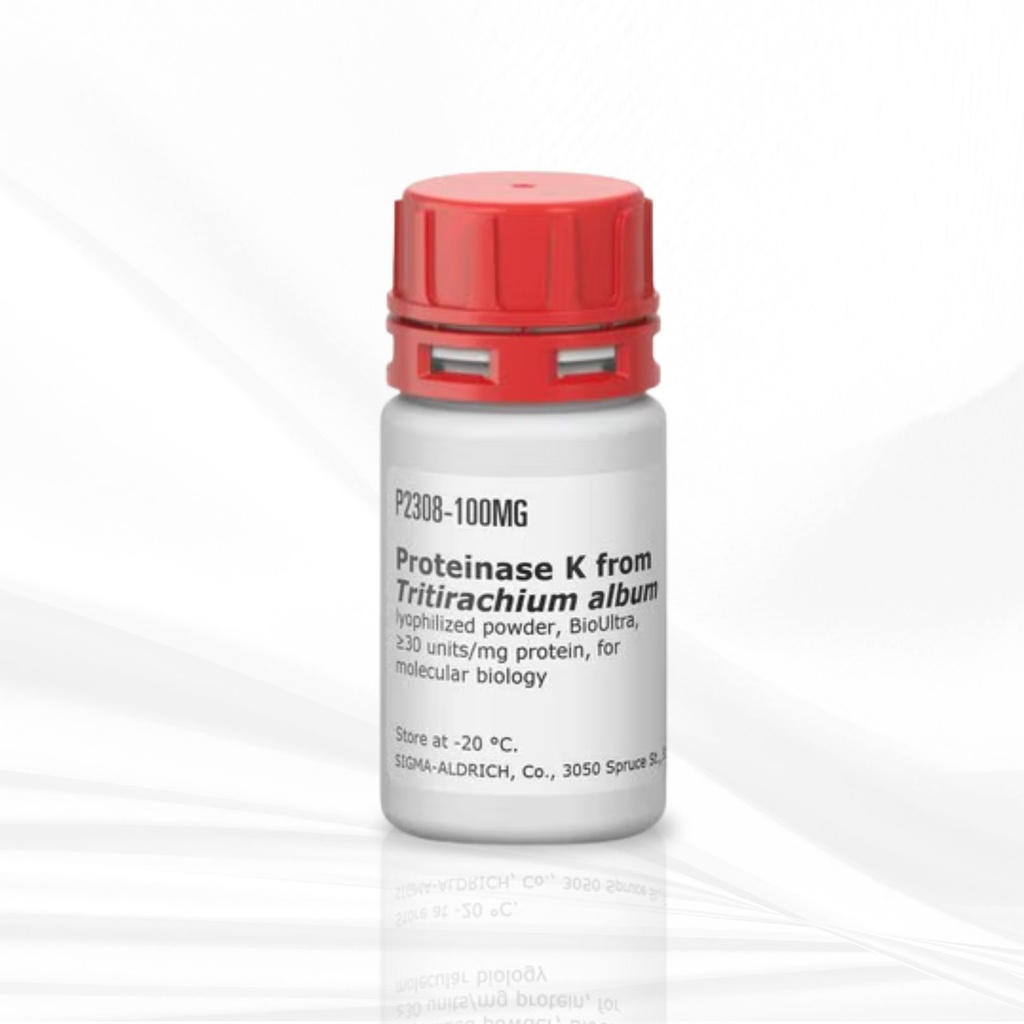
Quality Level: 400
product line: BioUltra
form: lyophilized
powder
specific activity:
≥30 units/mg protein
mol wt: 28.93 kDa
composition: Protein,
≥90% biuret
impurities: ≤1 ppm
DNA
foreign activity: DNAse,
Nickase and RNAse, none detected
shipped in: wet
ice
storage temp.: −20°C
Application
Useful for the proteolytic inactivation of nucleases during
the isolation of DNA and RNA.
Useful for the proteolytic inactivation of nucleases during
the isolation of DNA and RNA.
Removes endotoxins that bind to cationic proteins such as lysozyme and
ribonuclease A.
Reported useful for the isolation of hepatic, yeast, and mung bean mitochondria
Determination of enzyme localization on membranes
Treatment of paraffin embedded tissue sections to expose antigen binding sites
for antibody labeling.
Digestion of proteins from brain tissue samples for prions in Transmissible
Spongiform Encephalopathies (TSE) research.
Biochem/physiol Actions
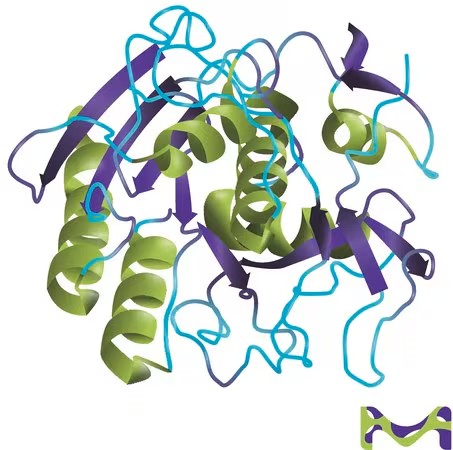
Proteinase K is a stable and highly reactive serine
protease. Evidence from crystal and molecular structure studies indicates the
enzyme belongs to the subtilisin family with an active-site catalytic triad
(Asp39-His69-Ser224). It is stable in a broad
range of environments: pH, buffer salts, detergents (SDS), and temperature. In
the presence of 0.1-0.5% SDS, proteinase K retains activity and will digest a
variety of proteins and nucleases in DNA preparations without compromising the
integrity of the isolated DNA.
Other Notes
One unit will hydrolyze urea-denatured hemoglobin to produce
color equivalent to 1.0 μmole of tyrosine per min at pH 7.5 at
37 °C (color by Folin-Ciocalteu reagent).